

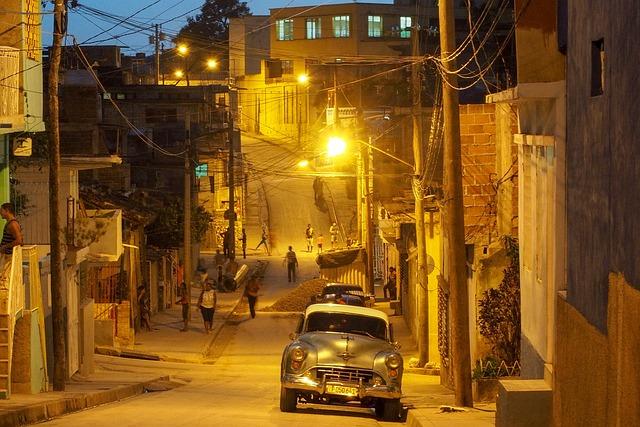
In a world where geopolitical tensions often dictate global narratives, Cuba’s steadfast motto of “Homeland or death” encapsulates the island nation’s unwavering commitment to sovereignty and self-defense. As U.S.-Cuban relations remain fraught with historical grievances and contemporary geopolitical maneuvering, Cuba’s military posture and defensive strategies are more crucial than ever. In this article, we delve into the complexities of Cuba’s defense mechanisms and military alliances, exploring how the nation perceives potential threats from the United States and the measures it has in place to safeguard its independence. With echoes of the Cold War still resonating today, we examine Cuba’s response to an evolving security landscape, highlighting the resilience and resolve of a nation shaped by decades of confrontation and rivalry.
Military Strategies and National Resilience in Cuba’s Defense Posture
Cuba’s defense strategy has been shaped by decades of geopolitical tensions, particularly with the United States. The nation prioritizes a multi-faceted approach to military readiness that emphasizes asymmetrical warfare, leveraging its geographical advantages and deeply entrenched nationalism among its populace. Central to this doctrine is the concept of “total defense,” which integrates civilian involvement in defense initiatives. Citizens are mobilized not only to support military efforts but also to be prepared to utilize local knowledge in defense scenarios. Key elements of this strategy include:
- Guerrilla tactics: Leveraging Cuba’s rugged terrain to conduct unconventional warfare.
- Public education: Training citizens in self-defense and survival strategies.
- Cyber warfare: Developing capabilities to counteract technological advantages held by potential adversaries.
Moreover, Cuba’s alliances with other nations have bolstered its defensive posture, providing a network of support that extends beyond its borders. Strategic partnerships with countries like Russia and Venezuela introduce additional layers of complexity to potential conflicts, particularly through arms agreements and military training programs. A succinct overview of Cuba’s military resources and support can be seen in the table below:
| Military Resource | Description |
|---|---|
| Ground Forces | Large reserve of trained personnel ready for rapid deployment. |
| Naval Capabilities | Small but strategically positioned fleet for coastal defense. |
| Aerial Defense | Use of vintage aircraft for surveillance and air defense operations. |
| Cyber Units | Specialized teams for cybersecurity and electronic warfare. |
The Role of International Alliances in Supporting Cuba’s Sovereignty
The landscape of international relations plays a crucial role in affirming Cuba’s sovereignty, especially amidst the ongoing tensions with the United States. Through various alliances, Cuba has been able to bolster its defense capabilities and maintain a stance of resilience. Key strategies include:
- Strengthening relationships with regional partners: Cuba has forged close ties with nations such as Venezuela and Nicaragua, providing mutual support against external pressures.
- Engagement with global organizations: Participation in groups like the Non-Aligned Movement offers Cuba a platform to advocate for its sovereignty and receive support from other countries.
- Military cooperation: Collaborative defense agreements with Russia and China enhance Cuba’s military readiness, deterring any potential aggression.
These alliances not only serve as a bulwark for Cuba’s security but also challenge the narrative of isolation. The international community often mobilizes in response to threats against Cuba, emphasizing the importance of collective defense. A notable example of this cooperation can be illustrated in the table below:
| Country | Type of Support | Year Established |
|---|---|---|
| Venezuela | Economic and military aid | 2000 |
| Russia | Defense cooperation agreements | 2014 |
| China | Investment and technology transfer | 2005 |
By leveraging these international alliances, Cuba aims to assert its sovereignty in the face of aggressive foreign policies, thus reinforcing its national defense and ensuring its integrity on the global stage.
Civilian Preparedness and the Cultural Imperatives of Resistance in Cuba
The resilience of the Cuban population is deeply intertwined with their historical narrative of resistance against external threats. Over decades, the government has fostered a culture of preparedness among civilians, emphasizing the necessity of unity and vigilance. Citizens are educated on the importance of communal defense, often participating in training exercises that align with their national ethos, which glorifies self-defense and national sovereignty. This cultural imperative is not merely a response to external pressures, but a fundamental aspect of the Cuban identity, reinforcing a collective understanding that each individual plays a crucial role in the nation’s security.
In light of potential threats, particular strategies and resources are emphasized to prepare civilians effectively. These include:
- Civil Defense Education: Regular workshops and drills that instill knowledge about emergency preparedness.
- Community Mobilization: Programs aimed at fostering group cohesion and immediate mobilization in times of crisis.
- Resource Management: Encouraging self-sufficiency through the development of local food systems and emergency supplies.
The strong emphasis on these programs reflects a broader strategy to ensure that every citizen not only understands their role in defense but also embraces it as a patriotic duty. This collective mindset aims to empower the population, equipping them with the necessary tools to respond effectively to any threats while reinforcing their unwavering commitment to their homeland.
To Conclude
In conclusion, the commitment to national sovereignty and defense remains a cornerstone of Cuba’s political discourse, as evidenced by the country’s resolute stance articulated in the phrase “Homeland or Death.” The analysis of military strategies and diplomatic maneuvers underscores the complexity of U.S.-Cuba relations, shaped by decades of historical tension and ideological conflict. While the prospect of confrontation may seem distant, the island nation continues to prepare, both militarily and politically, for any potential threat. As global dynamics evolve and external pressures mount, the dialogue surrounding Cuba’s defense capabilities and its defiance against perceived aggression will likely remain a focal point in international relations. Understanding these developments is crucial for comprehending not only Cuba’s future but also the broader geopolitical landscape of the Americas.

