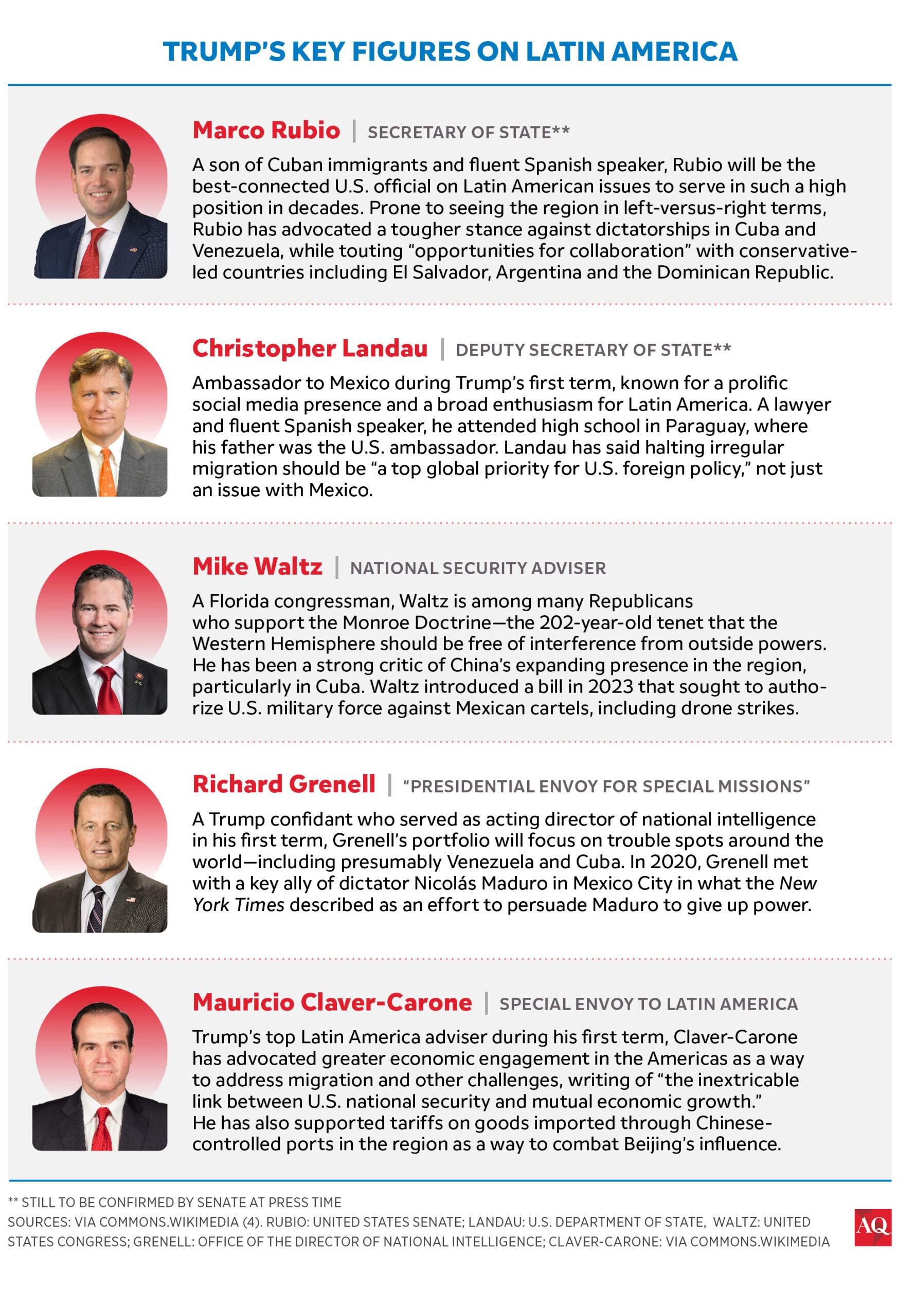
In the ever-evolving landscape of international relations, the approach of former President Donald Trump towards Latin America remains a focal point for analysts and diplomats alike. While his administration invoked a mix of hardline policies and bilateral engagements, the broader contours of his strategy in the region often sparked debate and scrutiny. As tensions with countries like Venezuela and Cuba heightened, and trade relationships were redefined, Trump’s Latin America strategy sought to prioritize U.S. interests while grappling with complex regional dynamics. In this article, we delve into the key elements of Trump’s Latin America policies, examining their implications for diplomatic relationships, economic partnerships, and the socio-political fabric of the region, as well as what his legacy might mean for future U.S.-Latin American relations.
Understanding Trump’s Approach to Latin America: Key Policies and Their Impacts
During his presidency, Donald Trump adopted a confrontational approach to U.S.-Latin America relations, characterized by a blend of nationalism and transactional diplomacy. Key aspects of his strategy included stringent immigration policies aimed at curtailing the movement of migrants from Central America, which he linked to issues of crime and economic burden on the U.S. The “zero tolerance” policy resulted in a significant crackdown on illegal immigration, leading to the controversial family separation policy. Furthermore, Trump’s administration placed a greater emphasis on bilateral trade agreements that favored U.S. interests, showcasing a departure from the multilateral frameworks that had previously defined U.S. engagement in the region.
On the economic front, the Trump administration sought to strengthen ties with certain countries while applying pressure on others. The United States-Mexico-Canada Agreement (USMCA) replaced NAFTA, aiming to enhance labor rights and intellectual property protections. Additionally, his administration emphasized the necessity of reducing dependency on China, urging Latin American countries to align themselves with U.S. economic interests. This approach was not without its critics, as it often neglected deeper issues such as human rights and democratic governance, leading to increased tensions with left-leaning governments and raising questions about the long-term sustainability of U.S. influence in the region.
| Policy Area | Description | Impact |
|---|---|---|
| Immigration | Implemented strict border controls and family separation policies. | Increased enforcement but led to humanitarian crises. |
| Trade | Replaced NAFTA with USMCA focusing on bilateral trade. | Enhanced U.S. leverage, but strained relations with some countries. |
| China Relations | Encouraged Latin American countries to reduce dependence on China. | Increased alignment with U.S., fostering geopolitical tension. |
Evaluating Economic and Trade Relations Under Trump’s Influence in the Region
The economic landscape across Latin America has experienced significant shifts under Trump’s administration, predominantly influenced by a mix of protectionist policies and a push for bilateral trade agreements. Trade relations have often served as a leveraging tool in diplomatic negotiations, focusing on “America First” principles. During his presidency, Trump advocated for renegotiating existing trade deals, notably NAFTA, which he transformed into the USMCA. This approach has instilled a sense of uncertainty among Latin American nations, prompting a reevaluation of their economic strategies and trading partners to secure better terms and avoid potential tariffs.
Key aspects of Trump’s influence on trade relations in the region include:
- Tariffs on Imports: The imposition of tariffs on steel and aluminum affected several Latin American countries reliant on exports to the U.S.
- Shift Towards Bilateral Agreements: An emphasis on one-on-one trade deals over multilateral arrangements allowed the U.S. to exert more control.
- Focus on National Security: National security concerns often framed economic discussions, linking trade policies to broader geopolitical strategies.
In response to these dynamics, various Latin American economies have sought new opportunities to diversify their trade relationships. Some have looked towards China and the European Union for partnerships that can mitigate the risks of heavy dependence on the U.S. market. The following table illustrates the shifts in trade balance among selected Latin American countries:
| Country | Trade Surplus/Deficit with the U.S. (2019) | Primary Export Partners (2021) |
|---|---|---|
| Mexico | -$81.5 billion | U.S., Canada, China |
| Brazil | $20.5 billion | China, U.S., Argentina |
| Argentina | – $9.5 billion | Brazil, U.S., China |
| Chile | $3.1 billion | China, U.S., Japan |
Recommendations for a Balanced and Sustainable U.S. Engagement in Latin America
The Conclusion
In conclusion, President Trump’s Latin America strategy reflects a complex interplay of economic interests, diplomatic relations, and immigration policies that are reshaping the United States’ ties with the region. While the administration has emphasized a hardline approach to immigration and a focus on combating drug trafficking, its impact on trade agreements and geopolitical alliances remains a topic of debate among analysts and policymakers. As Trump heads into the final stretch of his tenure, the long-term implications of these policies-both for the United States and its Latin American neighbors-will undoubtedly continue to evoke strong reactions and warrant close scrutiny. With the 2020 elections on the horizon, how this strategy evolves could play a significant role in influencing the future of U.S.-Latin America relations. As the region faces its own set of challenges, the question remains: will a shift in leadership lead to a reevaluation of these strategies, or will the existing policies endure to shape a new chapter in hemispheric relations?