

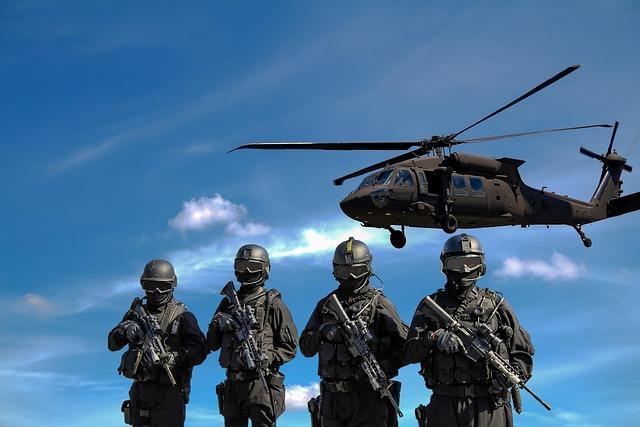
In a bold move underscoring the escalating battle against drug-related violence in Latin America, the United States Southern Command has confirmed the initiation of military operations in Ecuador aimed at combating what it describes as “narco-terrorists.” This announcement comes in response to the growing influence of organized crime in the region, which has seen a surge in drug trafficking activities linked to violent clashes between rival gangs. As U.S. officials seek to strengthen collaborative efforts with Ecuadorian forces, the operations aim to disrupt these criminal networks and restore order amidst rising concerns over national security and regional stability. The implications of this intervention extend beyond Ecuador, signaling a strategic pivot in U.S. foreign policy in the face of an evolving security landscape across the Americas.
US Southern Command Expands Military Operations in Ecuador to Combat Narco-Terrorism
The recent expansion of military operations in Ecuador by the US Southern Command marks a significant escalation in the ongoing fight against narco-terrorism in the region. The deployment aims to disrupt and dismantle the interconnected networks that facilitate drug trafficking and related violence. This initiative comes amidst rising concerns over the influence of organized criminal groups that have not only destabilized local communities but have also posed a threat to regional security. As part of this effort, US forces will collaborate closely with Ecuadorian military and law enforcement agencies, leveraging shared intelligence and operational capabilities.
Key components of the operation include:
- Intelligence Sharing: Enhanced cooperation between US and Ecuadorian forces to gather and analyze real-time data on narco-terrorist activities.
- Joint Training Exercises: Conducting specialized training programs aimed at improving tactical responses to drug-related violence.
- Operational Patrols: Increased maritime and aerial surveillance to disrupt supply chains and identify trafficking routes.
US officials have underscored that these actions are not only about countering drug production but also about addressing the broader implications of narco-terrorism, which can fuel corruption, violence, and instability throughout Latin America. In response, Ecuador’s government has expressed strong support for the initiatives, indicating a shared commitment to restoring safety and security in the region.
Analyzing the Strategic Implications of US Involvement in Ecuador’s Drug Warfare
The recent military operations launched by US Southern Command in Ecuador represent a significant shift in regional security dynamics, particularly in the ongoing fight against drug-related violence and organized crime. Officials have characterized these efforts as targeting ‘narco-terrorists’, indicating a strategic focus on groups that not only engage in drug trafficking but also use violence to influence political and social structures. This reflects an increasing recognition of the interconnectedness between drug trafficking and broader security challenges in the region, leading to a potential escalation of US involvement in Latin America. Key implications to consider include:
- Increased Military Aid and Support: US operations may signal a willingness to provide further resources and training to Ecuador’s armed forces.
- Regional Stability Risks: Targeting powerful drug trafficking organizations could provoke violent retaliations, destabilizing an already fragile social fabric.
- Diplomatic Relations: How Ecuador balances its sovereignty with US military presence could impact its relationships with neighboring countries and broader geopolitics in the region.
This involvement also raises questions about long-term implications for US policy in Latin America. With Columbia and Peru already identified as key players in the drug trade, US strategy may need to adapt to counterinsurgencies that can arise from drug conflict spillover. Additionally, historical precedents suggest that direct military interventions can lead to unintended consequences, such as prolonged engagements and local resentment. An examination of the past highlights crucial factors including:
| Historical Example | Outcome |
|---|---|
| Colombia’s Plan Colombia | Increased military capability but human rights abuses and displacement |
| US Involvement in Afghanistan | Prolonged conflict and insurgent resurgence |
Recommendations for Strengthening Regional Partnerships in the Fight Against Drug Trafficking
In light of recent military operations initiated by the US Southern Command in Ecuador targeting narco-terrorists, it is imperative for nations in the region to reinforce collaborative mechanisms to combat the multifaceted challenge of drug trafficking. Effective partnerships can significantly enhance intelligence sharing, resource allocation, and operational efficiencies. To facilitate this, stakeholders could consider the following strategies:
- Enhanced Intelligence Sharing: Establish secure communication channels for real-time intelligence exchange among regional law enforcement and military agencies.
- Joint Task Forces: Formulate joint units comprising personnel from various countries, equipped to conduct operations against trafficking networks seamlessly.
- Capacity Building: Provide training programs that strengthen the operational skills of local law enforcement personnel, tailoring these initiatives to specific regional needs.
- Community Engagement: Collaborate with local communities to build resilience against drug abuse, fostering trust and cooperation with law enforcement efforts.
Moreover, it is essential to track the effectiveness of these regional initiatives through consistent assessments. Taking a proactive stance in these areas can yield tangible results in the fight against drug trafficking. Below is a simplified framework that outlines potential metrics for measuring success:
| Metric | Goal | Current Status |
|---|---|---|
| Intelligence Reports Exchanged | Increase by 50% annually | 20% increase in the last year |
| Joint Operations Conducted | Initiate 10 new missions annually | 5 operations completed last year |
| Community Workshops Held | Organize 30 workshops yearly | 15 workshops conducted this year |
Insights and Conclusions
In summary, the recent military operations initiated by the U.S. Southern Command in Ecuador mark a significant escalation in the ongoing fight against narco-terrorism in Latin America. As U.S. forces engage with local authorities in the region, the implications for regional security and drug trafficking on a global scale remain to be seen. While the stated aim is to disrupt criminal organizations and foster stability, this move also raises questions about the long-term impact on Ecuador’s sovereignty and the broader geopolitical landscape in South America. As the situation develops, further scrutiny will be essential to assess the effectiveness and consequences of these operations.

