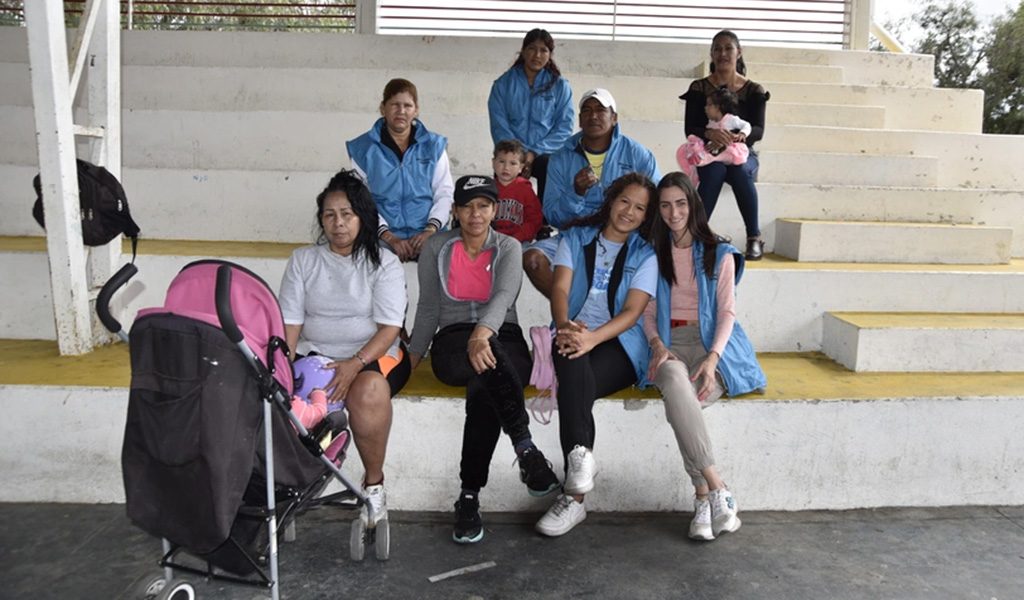
Willeyska reflects aloud on the weight of being a wanderer and what is lost on that journey. “I miss my mom a lot. I haven’t seen her for six years. She still hasn’t met my youngest daughter. It’s very hard to adapt,” she says.
Becoming a recycler is difficult for some, but finding decent employment results in complex labor exploitation contexts. Migrant populations work in areas unrelated to their profession or training due to the needs they must cover and the problem of validating their university degrees in the country.
Several stigmas have been established in society regarding labor matters, such as the fallacy that migrants “take” jobs from locals, which is a problem of unemployment affecting society as a whole.
Despite the hardships of being a migrant, Willeyska says that being part of RECIPRI is a positive experience. The organization has made satisfactory progress thanks to its legalization process in Ibarra and its savings box, where each member deposits one dollar daily for various procedures.
The association’s goal is to expand gradually. “Benefits will come with hard work. Our goal is for more people to get to know us; in this way, more organizations will support us in having our own space,” Willeyska says enthusiastically.
María Rojas, another member of RECIPRI, entered the country via a trail: half walking and half by bus. The 40-year-old from Anzoátegui has been living in Ecuador for a year and a half and stayed because one of her daughters asked her to.
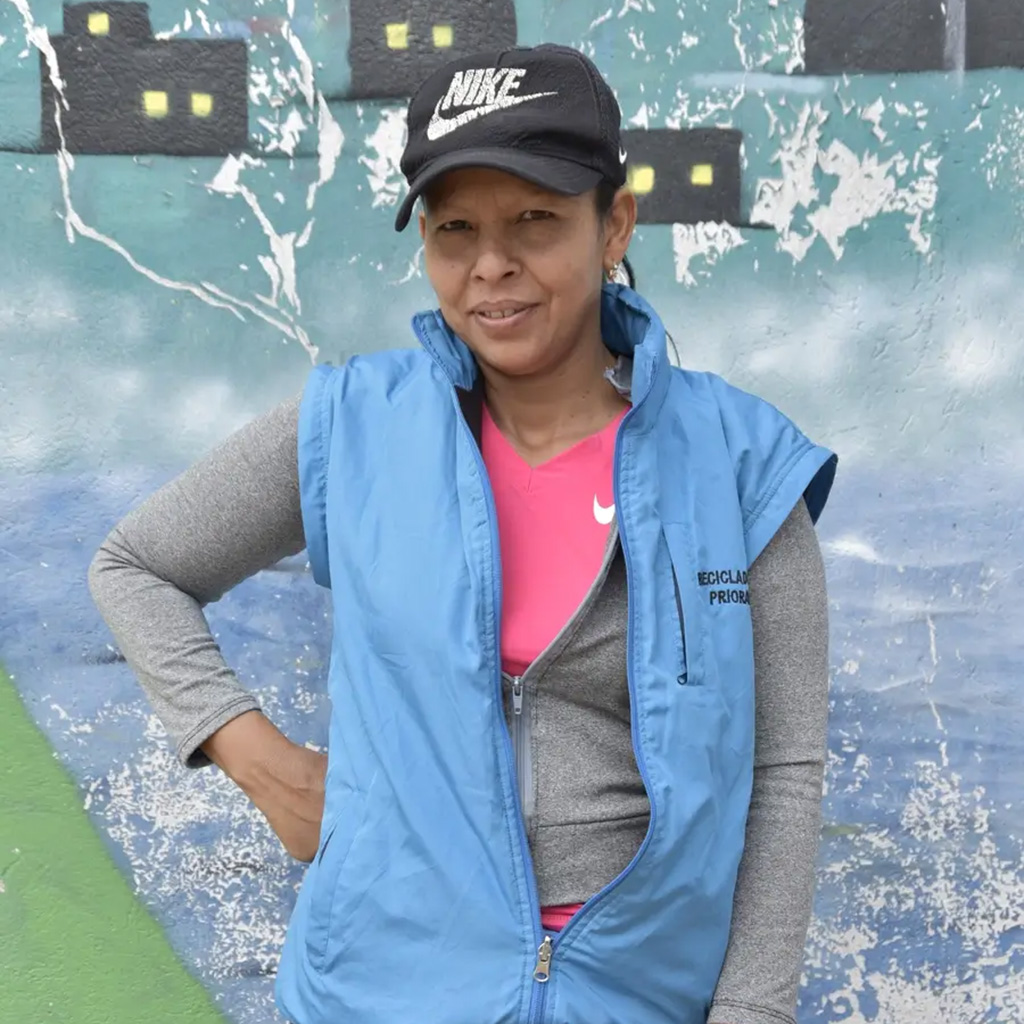 MISSING HOME. María Rojas arrived in the country with her daughter. She says she misses Venezuela every day. She is part of RECIPRI. Sebastián Vera for GK.
“I was doing well in Venezuela. My family is small; my mom and dad have passed away, and we are few siblings. Many people complain, but I came for my daughter,” she says. However, she plans to move to Quito in a year because she believes there are more job opportunities in the capital.
While she acknowledges that the country has given her opportunities, she has encountered many Ecuadorians who have criticized Venezuela but “are now in the same situation, migrating to the United States. The tongue is the body’s punishment.”
Yajaira Pérez, 50, also from Anzoátegui, has lived in Ecuador for a year and a half. “I spent five days walking from Colombia to Ecuador. I migrated for my niece, who brought me here to see her. I left my daughter with my grandchildren, whom I miss a lot. I miss my family, the beaches, the rivers, the fun, but the harsh situation there,” she reflects. For her, RECIPRI has become her family.
If all the people from Quito and Guayaquil suddenly migrated — around 4.7 million people — they would represent half of the Venezuelan diaspora of the last decade and the number of people in mobility seeking food, shelter, health, education, and formal employment, according to the Refugee and Migrant Response Plan data from May 2024.
Seventy percent struggle to access basic rights and dignified lives in Latin America and the Caribbean. Millions decided to leave hunger and despair to venture into the unknown of other latitudes, regardless of the climate or dangers along the way and at border crossings. Latin America is the grand stage of an epic odyssey. Moving implies inhabiting another, something different.
 OPPORTUNITIES. Juan Ramírez is from Cumaná and, like his Venezuelan compatriots, came to Ecuador for better opportunities. Sebastián Vera for GK.
Since 2022, Ecuadorians have become the second largest nationality to transit through the Darién province after Venezuelans, with 29,356 people registered in 2022 and 57,250 in 2023. According to Panama’s National Migration Service, by May 2024, 12,128 Ecuadorians had used this corridor. These figures reflect that the lack of work is a widespread problem, evidenced by Ecuadorian migration through risky routes.
Migrating is intertwined with the reconstruction and representation of expressions that, like a multifunctional archive, nourish stories, narratives, and memories. Migration is a journey of roots, displacement, and relocation, the experience of a historical journey of multiple and different voices, working through differences, the loss, and the debt of a forgotten territory.
Migration is an opportunity to (re)build a life despite the countless cries of sorrow. It coexists with life because it continues beyond exile, beyond the absolute in pain and love. It is a new chance to construct a vital narrative, move in imagination, be hidden, celebrated, forget, recreate home, and live in a country far from imaginary lines. – Rappler.com
This journalistic piece is the result of the Scholarships for covering migration in Ecuador, awarded by the Gabo Foundation in alliance with the World Bank and the International Organization for Migration (IOM), with the support of the Government of Canada and the Office of Population, Refugees and Migration of the Government of the United States.
The opinions, analysis, and conclusions expressed here are the authors’ sole responsibility and do not necessarily reflect the official position of the institutions that support this work.
This story was originally published in GK (Ecuador) and is republished within the Human Journalism Network program, supported by the ICFJ, International Center for Journalists.

Source link : http://www.bing.com/news/apiclick.aspx?ref=FexRss&aid=&tid=6775bf9dabce45c2bc94702483fb5059&url=https%3A%2F%2Fwww.rappler.com%2Fworld%2Flatin-america%2Fvenezuelan-migrants-ecuador-rebuild-lives-through-recycling%2F&c=15358571306041323350&mkt=en-us
Author :
Publish date : 2024-12-25 03:59:00
Copyright for syndicated content belongs to the linked Source.