

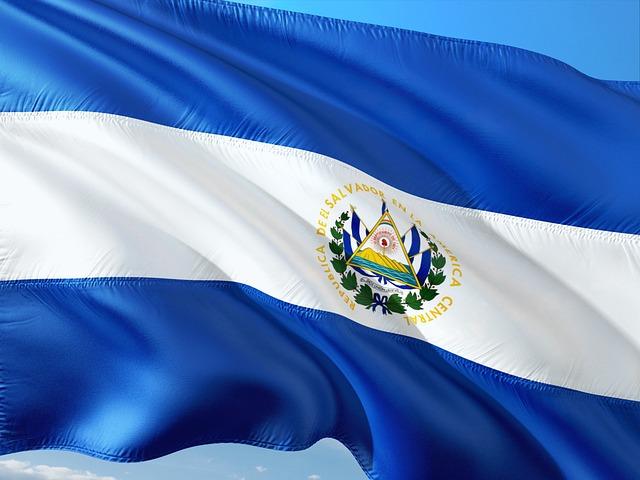
Meanwhile, in El Salvador: Assessing the Shifting Landscape of Foreign Policy
As Central America grapples with a host of pressing challenges-from economic instability to escalating violence-El Salvador stands at a crucial crossroads. Under the leadership of President Nayib Bukele, the nation has embarked on a bold agenda, capturing international attention with unprecedented policies and a controversial approach to governance. However, beyond the headlines of Bitcoin adoption and emergency powers, a complex tapestry of foreign relations is taking shape, influencing not only regional dynamics but also the entrenched interests of global powers. In this article, we delve into the evolving landscape of El Salvador’s foreign policy, exploring the implications of Bukele’s choices and the intricate interplay of domestic priorities and international partnerships. With the nation’s direction likely to resonate far beyond its borders, understanding these shifts is essential for grasping the future of both El Salvador and the broader Central American region.
Examining El Salvador’s Shift Towards Authoritarianism and Its Impact on Regional Stability
Under President Nayib Bukele’s administration, El Salvador has witnessed significant shifts in governance, marked by an increasingly authoritarian approach that raises concerns across Central America. Since coming into power in 2019, Bukele has embraced policies that consolidate power within the executive branch, undermining checks and balances that previously existed. Among the most controversial measures were the removal of Constitutional Court judges and the Attorney General, actions that critics argue erode democracy and judicial independence. The ramifications of this power consolidation are multifaceted, impacting not only domestic politics but also the broader regional stability as neighboring countries view El Salvador’s trajectory with apprehension.
Moreover, Bukele’s administration has positioned itself as a pioneering force in the region by embracing Bitcoin and other cryptocurrencies, attempting to attract foreign investment. However, this move has been met with mixed reactions, as economic instability and a growing reliance on digital currency could lead to social unrest and further entrench authoritarianism. The potential rise of economic and political instability in El Salvador could inspire similar movements in other countries, leading to an unsettling chain reaction throughout Central America. Key factors to monitor include:
- Increased emigration: An authoritarian regime may provoke more citizens to flee, exacerbating the immigration crisis in the region.
- Impact on human rights: With growing government control, violations of human rights could become more common, drawing international condemnation.
- Foreign relations: Regional alliances may shift as countries respond to El Salvador’s changing political climate, complicating diplomatic ties.
Reassessing US-Salvadoran Relations in the Context of Migration and Security
In recent years, the complex dynamics between the United States and El Salvador have increasingly been framed within the contexts of migration and security. As a significant source of migrants fleeing violence and poverty, El Salvador’s relationship with the U.S. is marked by urgent discussions around policy and humanitarian aid. Notably, U.S. foreign aid has targeted the root causes of migration, attempting to stabilize the region through economic development and crime prevention initiatives. However, many argue that these efforts have often fallen short, leading to a cycle where desperate circumstances continue to push Salvadorans northward in search of safety and opportunity.
The escalation of gang violence in El Salvador, paired with the government’s controversial strategies for tackling crime, has further complicated the bilateral relationship. The U.S. has expressed concerns over the country’s human rights record, particularly in relation to law enforcement practices. To better understand the evolving partnership, one can consider several key areas of focus:
- Migration Trends: Assessing the demographic shifts and motivations behind migration flows to the U.S.
- Security Policies: Analyzing the effectiveness of Salvadoran security measures and U.S. support in reducing violence.
- Economic Aid: Evaluating the impact of U.S. assistance programs on local communities and migration rates.
- Human Rights: Monitoring the implications of U.S. support on civil liberties and governance in El Salvador.
| Year | Estimated Migrants to U.S. | U.S. Aid ($ Millions) |
|---|---|---|
| 2018 | 50,000 | 200 |
| 2019 | 60,000 | 250 |
| 2020 | 80,000 | 300 |
Recommendations for a Constructive Engagement Strategy with El Salvador’s Government
To foster a productive relationship with El Salvador’s government, it is essential to prioritize mutual respect and dialogue. Engaging with local stakeholders, including civil society organizations and grassroots movements, can provide valuable insights into the socio-political landscape. This collaborative approach ensures that foreign policy initiatives are more attuned to the needs and aspirations of the Salvadoran people. Key strategies should include:
- Establishing bilateral forums for continuous dialogue on economic, security, and social issues.
- Encouraging transparency in governance through partnerships that uphold democratic values.
- Supporting sustainable development projects that directly benefit communities, enhancing goodwill and trust.
Additionally, leveraging technology to enhance communication and facilitate feedback from the populace can strengthen the engagement strategy. By employing innovative platforms, both parties can keep abreast of public sentiment and respond proactively to emerging challenges. Creating a structured framework for these interactions will be vital. The following table outlines potential areas for cooperation:
| Area of Cooperation | Proposed Initiatives |
|---|---|
| Economic Development | Investment in green energy and tech startups. |
| Security | Joint training programs for law enforcement. |
| Education | Scholarships for Salvadoran students to study abroad. |
In Conclusion
As El Salvador continues to navigate its complex political landscape, the implications of its evolving foreign policy extend far beyond its borders. The nation’s strategic alliances, economic initiatives, and social reforms not only shape its future but also reverberate throughout the region. Analysts and observers must remain keenly attuned to these developments, as they hold significant ramifications for both regional stability and international relations. With challenges looming and opportunities emerging, El Salvador’s foreign policy will undoubtedly remain a focal point for policymakers and scholars alike. As the world watches, the question remains: how will El Salvador position itself on the global stage in the coming years, and what lessons can be gleaned from its journey? Only time will tell.

