

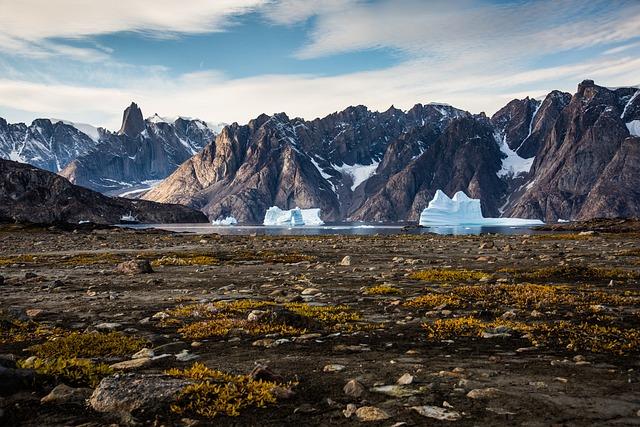
In a surprising twist in international relations, discussions surrounding Greenland’s political status resurfaced during a recent address by former President Donald Trump at the World Economic Forum in Davos. In his remarks, Trump revived the contentious narrative of the United States’ historical ties to the autonomous territory, suggesting a misunderstanding of the complexities surrounding its governance. As various world leaders gathered to address pressing global issues, the former president’s comments sparked a flurry of debate about Greenland’s relationship with Denmark, the implications of colonial legacies, and the ongoing strategic interests of the U.S. in the Arctic region. This article delves into the historical context of Greenland’s status, examines the implications of Trump’s assertions, and assesses how these sentiments resonate in contemporary geopolitical discussions.
US Historical Ownership of Greenland: An Examination of Claims and Context
The intricate relationship between the United States and Greenland is deeply rooted in history, marked by a series of claims and significant geopolitical interests. The U.S. first expressed interest in Greenland as early as the 19th century, during a period characterized by a scramble for territorial expansion and influence. The strategic importance of Greenland was highlighted during World War II, when the U.S. established military bases to protect shipping routes and counter Axis powers. Subsequently, in 1946, President Harry S. Truman offered to buy Greenland from Denmark for $100 million, seeing its value as a bastion of North American defense, although that bid was ultimately rejected by Denmark.
In the decades that followed, the U.S.’s presence in Greenland solidified, particularly through the Thule Air Base, which remains an essential site for both military and scientific endeavors. Greenland’s self-governance status further complicated the narrative; while it is an autonomous territory within the Kingdom of Denmark, the U.S. continues to prioritize its strategic interests. As discussions surrounding the informal and often misrepresented “sale” of Greenland reignite, it is vital to recognize the historical context that frames these claims, illustrating a complex tapestry of diplomacy, military strategy, and evolving governance in the Arctic region.
The Implications of Trump’s Remarks at Davos: Understanding the Geopolitical Landscape
The recent remarks made by former President Trump during the World Economic Forum in Davos have stirred a fresh wave of discussion regarding the intricate histories and relationships among nations, particularly that of Greenland and Denmark. Trump’s assertion seemed to downplay significant historical events, leading to a narrative that oversimplifies the complexities of sovereignty and territorial governance. Key points worth noting include:
- Greenland was a Danish colony for centuries before it gained home rule in 1979 and further autonomy in 2009.
- The U.S. purchased the Danish West Indies in 1917, yet Greenland was not part of that transaction.
- The U.S. has maintained military bases in Greenland, highlighting ongoing strategic interests in the Arctic region.
As the geopolitical landscape continues to evolve, Trump’s comments not only reflect a detached understanding of history but also underscore the delicate nature of international diplomatic relations. The implications of such statements can resonate deeply, potentially affecting negotiations between allied nations and triggering recalibrations in global partnerships. Consider the following implications:
| Implication | Potential Impact |
|---|---|
| Strained Danish-American relations | Could lead to increased tensions and less collaboration in NATO. |
| Reassessment of territorial claims | May provoke a reevaluation of claims in the Arctic by other nations. |
| Public perception shifts | Public sentiment in Greenland and Denmark may evolve based on historical narratives. |
Insights and Conclusions
In conclusion, the recent comments by former President Donald Trump at the World Economic Forum in Davos raise significant questions about the complexities of US-Denmark relations and the historical context surrounding Greenland’s administration. Trump’s omission of critical historical facts related to the United States’ acquisition of Greenland underscores the need for a more nuanced understanding of international relations and territorial governance. As discussions continue around Arctic sovereignty and geopolitical interests, it remains paramount for both policymakers and the public to engage with the complete historical narrative. Whether or not the US will revisit its stance on Greenland, the implications of these dialogues will undoubtedly shape the future dynamics between these nations. As the situation evolves, staying informed will be essential for grasping the intricate tapestry of global diplomacy.

