

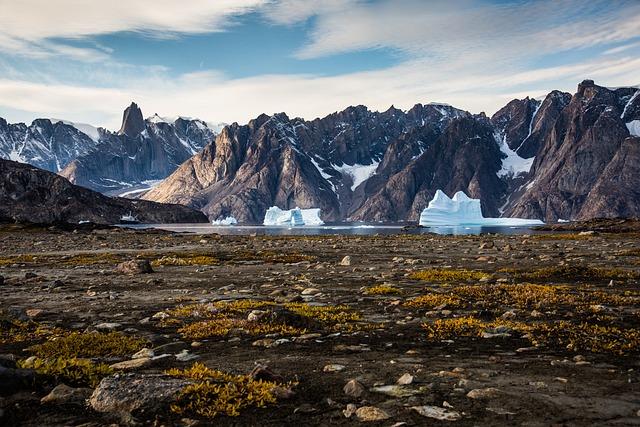
In a move that has sparked international intrigue and political debate, former President Donald Trump’s interest in acquiring Greenland has resurfaced as a focal point in global discussions about U.S. foreign policy. This unconventional aspiration raises critical questions about the implications for NATO and the European Union, as it signifies a potential shift in America’s strategic priorities in the Arctic region. With its vast natural resources and geopolitical significance, Greenland has long been a point of contention among global powers. As the Arctic continues to attract heightened attention due to climate change and emerging trade routes, understanding the motivations behind Trump’s Greenland proposal-and its potential fallout-becomes increasingly essential. This article explores the underlying reasons for Trump’s fascination with the territory and examines what such a move could mean for the future of transatlantic alliances.
Trump’s Aspirations for Greenland: Analyzing Strategic Interests and Geopolitical Implications
Trump’s interest in Greenland can be examined through multiple strategic lenses, particularly in terms of natural resources and military positioning. The Arctic region is gaining prominence not only for its untapped reserves of oil and gas but also for its rapidly changing shipping routes due to climate change. A few key points to consider include:
- Natural Resources: Greenland is believed to possess significant mineral wealth, including rare earth elements essential for modern technologies.
- Geopolitical Location: Located between North America and Europe, Greenland’s geographic positioning could enhance NATO’s strategic operations.
- Security Posture: Control over Greenland could bolster U.S. military capabilities in the Arctic, providing a counterbalance to Russian influence in the region.
Furthermore, the implications of this interest extend beyond bilateral U.S.-Greenland relations, posing challenges to both NATO and the European Union. As member states grapple with the shifting dynamics of Arctic governance, several factors may emerge:
| Implication | Description |
|---|---|
| NATO Unity | As Arctic competition intensifies, member nations must align on collective security strategies. |
| EU Response | European countries may need to enhance their presence and policies in Arctic affairs to counterbalance U.S. actions. |
| International Relations | Increased U.S. interest might provoke a stronger Russian military presence, requiring diplomatic engagement. |
Navigating Alliances: The Potential Impact on NATO and EU Relations Amidst Territorial Ambitions
The interest in Greenland has reignited discussions about the geopolitical chessboard, centering on how such claims relate to NATO and EU dynamics. As the United States, under the previous administration, showcased a penchant for expanding territorial influence, this move could potentially shift alliances within the Atlantic framework. With its strategic location between North America and Europe, Greenland holds value beyond its natural resources. The U.S. assertively pursuing Greenland could lead to a reshuffling of NATO priorities, prompting member countries to reevaluate their own territorial engagements and military commitments.
Moreover, the prospect of U.S. territorial ambitions in the Arctic may raise concerns among EU nations, particularly those reliant on U.S. security guarantees. The move could exacerbate existing tensions over territorial claims in the region, heightening the stakes for both NATO and the EU. As Europe’s vulnerability to external threats intensifies, the bloc may feel pressured to enhance its defense coordination, leading to a reevaluation of transatlantic relations. Thus, the implications of such aspirations are profound, potentially influencing European defense strategies and NATO’s collective response in an increasingly multipolar world.
Future Outlook
In conclusion, President Trump’s expressed interest in Greenland raises a multitude of questions not only about U.S. foreign policy but also about the implications for NATO and the European Union. As the geopolitical landscape continues to shift, the potential acquisition of Greenland could significantly alter strategic alliances and resource dynamics in the Arctic region. The discussions surrounding this topic highlight a broader narrative of nationalism and power projection that resonates throughout international relations today.
The Danish government’s firm rejection of any notion of sale underscores the complexities involved in such territorial ambitions, as well as the potential ramifications for transatlantic relations. As observers continue to analyze this unfolding story, it is clear that the interest in Greenland is more than just a real estate venture; it reflects deeper strategic interests that could redefine NATO’s collective security framework and influence EU policy.
As we contemplate the future, the world watches closely, aware that decisions made today may set the stage for international cooperation-or tension-tomorrow. The dialogue around Greenland will undoubtedly remain a focal point in discussions of global strategy and diplomacy in the months to come.

