

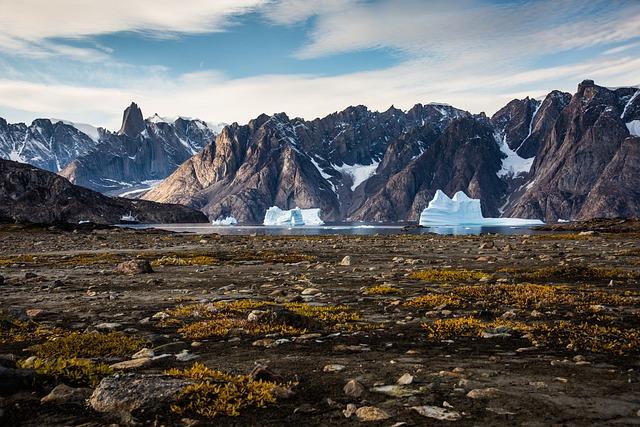
In a geopolitical landscape where territorial ambitions often intersect with national interests, the United States’ longstanding gaze upon Greenland has resurfaced with renewed vigor. For more than a century, this vast Arctic island has captivated American policymakers, driven by a combination of strategic military considerations and economic aspirations. The recent proposal by former President Donald Trump to acquire Greenland, though met with international skepticism and outright dismissal by Danish officials, underscores a persistent American fascination with the territory. As discussions about Arctic sovereignty and global power dynamics evolve, Trump’s efforts have reignited debates over what Greenland means for U.S. foreign policy and its implications for relations with Denmark and other Arctic nations. This article delves into the historical context of America’s interest in Greenland, exploring the motivations behind Trump’s ambitions and the broader significance of the island in a changing world order.
Longstanding U.S. Interests in Greenland Drive Renewed Diplomatic Efforts
For more than a century, Greenland has held a strategic allure for the United States, primarily due to its geographical positioning and abundant natural resources. This interest has been fueled by several factors, including the desire for enhanced national security, particularly during the Cold War, and more recently, the implications of climate change and the opening of new shipping routes. As global warming continues to melt Arctic ice, the potential for new mineral discoveries and access to untapped markets has only intensified American attention towards the island. With tensions rising in the Arctic region, Washington sees Greenland not just as a territory of interest, but as a critical asset in maintaining geopolitical balance.
U.S. diplomatic efforts have been revitalized in light of these longstanding interests, particularly with initiatives aimed at strengthening ties with the Kingdom of Denmark, which oversees Greenland. This includes:
- Increased economic partnerships: To support local economies and bolster investments in sectors like sustainable fishing and tourism.
- Military collaborations: Enhancing defense capabilities in the region through joint exercises and facility upgrades.
- Environmental initiatives: Addressing climate change impacts collaboratively while preserving Greenland’s unique ecosystem.
As American leaders consider a renewed push for influence in Greenland, the stakes are higher than ever. An evolving landscape marked by both opportunity and competition with other powers, particularly China and Russia, underscores the need for America to reassert its commitment to Greenland’s sovereignty and future.
Strategic Implications of Greenland’s Resources and Geopolitical Location for America
The strategic implications of Greenland’s vast resources and its geopolitical location are becoming increasingly critical for the United States. As the Arctic region experiences melting ice due to climate change, new shipping routes open, enhancing access to trade routes between North America, Europe, and Asia. This evolving landscape not only underscores the economic potential tied to natural resources but also highlights how Greenland can serve as a military and logistical linchpin. The presence of critical minerals such as rare earth elements and significant fishing grounds positions Greenland as a key asset in global supply chains, which are vital for U.S. technological dominance and national security. Consequently, the U.S. must consider strategies that minimize reliance on adversarial nations for these crucial materials.
Moreover, as geopolitical rivalries with countries like China and Russia intensify, securing a foothold in Greenland could yield considerable benefits for the U.S. in terms of defense posture and intelligence capabilities. Establishing a stronger presence in Greenland could facilitate enhanced surveillance and monitoring of Arctic activities, aiding in the protection of U.S. interests in the region. The following factors exemplify the importance of Greenland’s resources and location:
- Resource Availability: Rare earth minerals, oil, and gas reserves.
- Strategic Military Location: Proximity to critical ocean routes.
- Geopolitical Influence: Counteracting growing Chinese presence in the Arctic.
- Environmental Concerns: Greater responsibility to protect Arctic ecosystems.
Key Takeaways
In conclusion, the long-standing intrigue surrounding Greenland’s strategic significance to the United States has once again resurfaced in the national dialogue, underscored by former President Donald Trump’s renewed interest in acquiring the territory. As discussed, this ambition is not merely a contemporary whim but rather a culmination of over a century of American interest in Greenland’s resources and location. With evolving geopolitical dynamics and the rising importance of Arctic policy, the conversation around Greenland is likely to persist, reflecting broader themes of national security and resource management. As the U.S. navigates its foreign policy objectives, the fate of Greenland may serve as a critical chapter in understanding the nation’s enduring desire to assert its influence in the Arctic region. The future of this longstanding interest remains to be seen, as geopolitical realities and diplomatic negotiations continue to unfold.

