

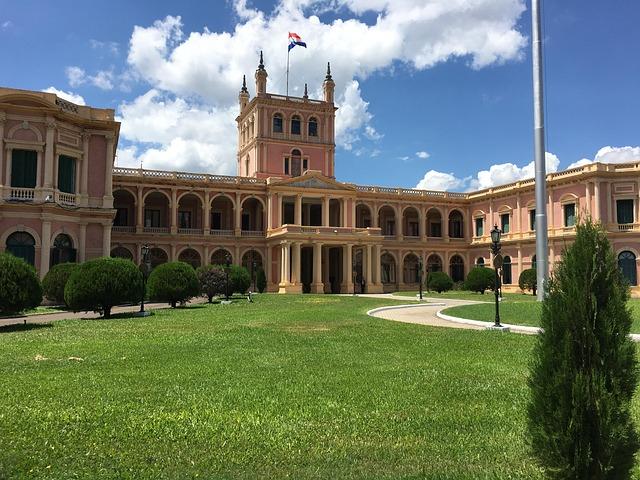
In the intricate web of international relations, the small landlocked nation of Paraguay has emerged as a pivotal player, attracting the gaze of global powers such as China, Taiwan, and the United States. Despite its modest size and population, Paraguay occupies a unique strategic position that encapsulates broader geopolitical ambitions and economic interests. As one of the few remaining allies of Taiwan in Latin America, Paraguay’s recognition has become a significant point of contention amid China’s rise as a global superpower. Meanwhile, the United States is closely monitoring these dynamics, recognizing Paraguay’s potential as a key partner in the region. This article delves into the reasons why Paraguay matters so much to these three influential nations, exploring the intricate ties that bind them and the implications for regional stability and diplomatic relations.
Paraguay’s Strategic Role in Geopolitical Alliances: Implications for China, Taiwan, and the United States
Paraguay stands out as a pivotal player in a complex web of geopolitical alliances, especially regarding its unique relationships with China, Taiwan, and the United States. With its recognition of Taiwan as a sovereign state, Paraguay maintains a crucial link for Taiwan in the global arena, amplifying the island’s diplomatic presence in a landscape where many nations have shifted their allegiance toward Beijing. This decision not only solidifies Paraguay’s role as a key ally for Taiwan but also positions it as a potential counterbalance to China’s growing influence in Latin America. The economic contributions from Taiwan through investment and development aid further deepen this relationship, prompting Paraguay to become a focal point in conversations about global trade routes and economic partnerships.
On the other hand, the United States views Paraguay through a different lens. As part of its strategy to counter China’s expansion in the Western Hemisphere, Washington has ramped up its diplomatic engagement and economic assistance to Paraguay. This engagement includes not only military cooperation but also agricultural and infrastructural investments designed to bolster Paraguay’s development while simultaneously reducing its reliance on Chinese investments. The implications of these evolving dynamics can be summarized as follows:
| Country | Strategy | Key Interests |
|---|---|---|
| China | Expand influence via investment | Access to resources, trade routes |
| Taiwan | Strengthen diplomatic ties | Global presence, support against China |
| United States | Counter China’s expansion | Security, economic development |
Economic Opportunities and Challenges: Navigating Trade Relations with Paraguay
Paraguay presents a complex tapestry of economic opportunities and challenges for its trade partners, particularly China, Taiwan, and the United States. As one of South America’s hidden gems, Paraguay boasts significant agricultural exports, particularly soybeans and beef, which are crucial for countries looking to secure food supplies. However, the landscape is fraught with challenges such as infrastructure deficits and regulatory hurdles that can hinder foreign investment and trade efficiency. Companies looking to enter or expand in the Paraguayan market must navigate these intricacies, balancing the potential for profit against the risks of doing business in a region where political stability is often uncertain.
In addition to agricultural products, Paraguay is increasingly seen as a strategic hub for renewable energy. The country’s vast hydroelectric resources, mainly from the Itaipu Dam, position it as an emerging player in sustainable energy exports. However, while these resources attract foreign interest, geopolitical factors complicate the situation. To strengthen ties and enhance trade relations, stakeholders must address issues such as tariffs, trade agreements, and diplomacy. For instance, the varying degrees of recognition of Taiwan lead to contrasting alliances that can influence trade dynamics. The table below summarizes the current trade dynamics and challenges faced by these countries in their engagement with Paraguay:
| Country | Opportunities | Challenges |
|---|---|---|
| China |
|
|
| Taiwan |
|
|
| United States |
|
|
The Future of Diplomacy in the Region: Recommendations for Strengthening Ties and Cooperation
In an increasingly interconnected world, fostering robust diplomatic relations in the region becomes essential for ensuring collective security and prosperity. China, Taiwan, and the United States must adopt a multilayered approach that includes economic collaboration, cultural exchanges, and strategic dialogues. To enable this, countries should focus on:
- Enhancing Trade Agreements: Revising and expanding trade agreements can set a foundation for mutual economic benefits and increased investment.
- Facilitating Cultural Exchange Programs: Promoting understanding through educational scholarships, art exhibitions, and cultural festivals can create goodwill.
- Engaging in Joint Regional Initiatives: Collaborating on pressing regional challenges such as climate change and public health can bolster solidarity.
Moreover, establishing a diplomatic framework that encourages open communication and conflict resolution is crucial. A dedicated regional summit could serve as a platform to discuss critical issues and reinforce commitments to cooperative measures. Below is a proposed structure for such a summit:
| Summit Components | Objectives |
|---|---|
| Opening Ceremony | To reaffirm commitment to peace and cooperation |
| Workshops on Economic Development | To explore collaborative trade and investment opportunities |
| Cultural Exchange Panels | To share cultural heritage and foster mutual respect |
| Strategic Dialogue Sessions | To address regional security and geopolitical concerns |
Key Takeaways
In conclusion, Paraguay’s geopolitical significance cannot be understated in the intricate web of international relations involving China, Taiwan, and the United States. As Taiwan navigates its precarious diplomatic landscape, Paraguay emerges as one of its few allies, embodying the struggle for recognition and support in a rapidly changing world. Meanwhile, China’s growing influence in Latin America further complicates the dynamics, as it seeks to expand its footprint through economic initiatives that often favor political alignment. The United States, for its part, is keenly aware of the implications of these alliances, as it seeks to counter China’s assertive strategies while bolstering its presence in the region. As this multifaceted triangle continues to evolve, Paraguay stands at a crossroads, playing a pivotal role in shaping the future of diplomatic relations in Latin America and beyond. Understanding these dynamics is essential for policymakers and analysts alike as they navigate the challenges and opportunities that lie ahead.

