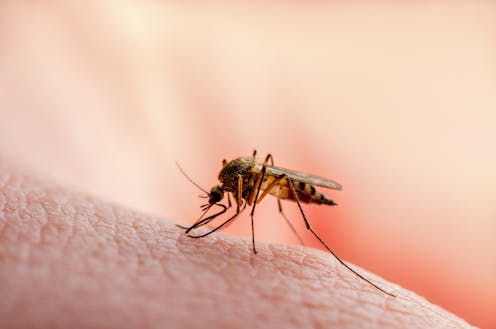
Being bitten by an infected mosquito or midge can lead to Oropouche virus disease. nechaevkon/ Shutterstock” src=”https://s.yimg.com/ny/api/res/1.2/BEMloYsIWQV2TJq__S1ZwA–/YXBwaWQ9aGlnaGxhbmRlcjt3PTk2MDtoPTYzNw–/https://media.zenfs.com/en/the_conversation_464/cc3fe306e97df41cd3326ef4ff7db159″ data-src=”https://s.yimg.com/ny/api/res/1.2/BEMloYsIWQV2TJq__S1ZwA–/YXBwaWQ9aGlnaGxhbmRlcjt3PTk2MDtoPTYzNw–/https://media.zenfs.com/en/the_conversation_464/cc3fe306e97df41cd3326ef4ff7db159″/>
Health officials have issued a warning to travellers after 19 cases of the insect-borne illness Oropouche virus were confirmed for the first time ever in Europe. Those who had tested positive for the virus had recently returned from holiday in Cuba and Brazil.
Parts of South America and Cuba are currently in the midst of an ongoing outbreak of Oropouche virus, with cases many times higher than normal. The first ever deaths from Oropouche virus were also confirmed recently in Brazil, adding to concerns about the current outbreak.
Oropouche virus is an arthropod-borne virus – meaning it’s transmitted to humans if they’re bitten by infected midges or mosquitoes. It’s the most prevalent arthropod-borne viral disease in south America – after dengue virus.
The virus was first discovered in 1955 in a forest worker who had contracted it working near the Oropouche river in Trinidad and Tobago. The first large outbreak was reported in the 1960s in Belém, Brazil, where 11,000 cases were recorded.
Since then, repeated outbreaks of Oropouche virus have occurred. It’s estimated that more than half a million people have been infected by Oropouche virus since it was first detected. Outbreaks have mainly occurred in tropical areas of South America, Central America and the Caribbean (though mainly in the Amazon region of Brazil and Peru).
Oropouche virus is transmitted to humans primarily through the bite of infected midges or mosquitoes – typically those found in forested areas and around water bodies. Transmission usually happens in the daytime, especially during sunrise and sunset.
Symptoms of Oropouche virus disease are quite similar to the flu – causing an abrupt fever, headache, dizziness, chills, muscle aches and pain and sensitivity to light. These symptoms usually last 2-5 days after being bitten by the infected insect. Most people recover without long-term effects, but symptoms can recur if you return to strenuous activities too soon after being ill.
Unfortunately there’s no specific antiviral treatments for Oropouche virus disease – though patients can be given pain relief and re-hydration treatments to manage symptoms.
Although Oropouche virus is typically not fatal, it can cause serious complications – such as encephalitis and meningitis. Two young Brazilian women recently died as a result of Oropouche virus, due to the sudden onset of symptoms which led to haemorrhaging.
The virus may also be connected to a spate of miscarriages, still birth and birth defects in Brazil.
Rising cases
Between January and mid-July of this year, there has been a sharp increase in Oropouche virus infections in the Americas – with more than 8,000 confirmed cases.
Over 7,000 of these cases have been in Brazil. This is a significant jump from the 832 cases reported there last year. Not only is the spike in cases so alarming, it’s concerning that the virus has directly caused two deaths for the first time ever. It’s also worrying that outbreaks are being reported in areas where Oropouche virus has not previously been detected.
It’s not entirely clear just yet why Oropouche virus cases are so high this year. Climate change may be one factor, as higher temperatures in the region speed the maturation of insects. Flooding also creates more standing water, which is a perfect environment for insects to reproduce.
Other factors potentially contributing to the rise of Oropouche virus include deforestation (displaces mosquitoes, causing them to feed on humans instead of animals) and increased movement of people across the continent between forested and urban areas.
Mutations can also impact the virus’ ability to infect, cause disease, spread and evade the immune system. Preliminary evidence shows that mutations and genetic changes in the virus’s genome might underlie the current outbreak.
Despite the enormous threat Oropouche virus poses to public health, there are currently no licensed vaccines to prevent the disease. So the best way to protect yourself from Oropouche virus disease is to avoid being bitten by insects in areas where the virus is present – particularly in South America, Central America and the Caribbean.
The best way to avoid insect bites is to use insect repellent. Look for products that contain picaridin and diethyltoluamide (DEET). Aim to apply a thin, even layer of repellent to exposed skin – and reapply regularly as required, especially after swimming or if you’ve gotten very sweaty. Repellent should be applied over sunscreen.
Alongside repellent, you can also wear long clothing that covers your arms and legs, and cover doors and screens when indoors for mosquitoes can’t get in. Fans may also help blow insects away. You should also be sure to get rid of any food waste, dead leaves and water reservoirs around your home to reduce spots where female insects can lay their eggs.
The likelihood of the spread of Oropouche virus in the UK and Europe is considered very low, despite imported cases being confirmed. This is because the virus is spread from insect to human – and no instances of human-to-human transmission have been reported to date.
Travellers to areas where outbreaks happen often (such as Brazil) should be extra vigilant and take precautions to avoid contracting the virus.
This article is republished from The Conversation under a Creative Commons license. Read the original article.
Manal Mohammed does not work for, consult, own shares in or receive funding from any company or organisation that would benefit from this article, and has disclosed no relevant affiliations beyond their academic appointment.
Source link : http://www.bing.com/news/apiclick.aspx?ref=FexRss&aid=&tid=66bb6420245f4aa28a233ff0ea009afc&url=https%3A%2F%2Fuk.news.yahoo.com%2Foutbreak-insect-borne-illness-south-134346623.html&c=1417030074958409932&mkt=en-us
Author :
Publish date : 2024-08-12 22:43:00
Copyright for syndicated content belongs to the linked Source.