

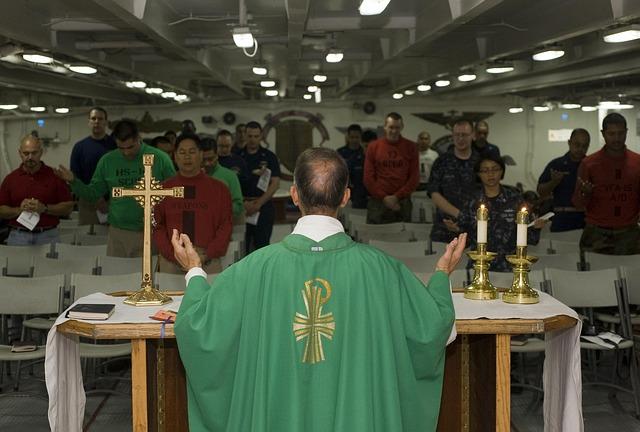
In a bold act of civil disobedience, a group of Argentine Catholic priests has announced a hunger strike to protest against the recently inaugurated government of President Javier Milei. This unprecedented move comes as a response to the government’s policies, which the priests claim undermine social justice and exacerbate poverty in one of South America’s most economically vulnerable nations. The hunger strike, launched in prominent locations across the country, aims to draw attention to the struggles faced by the marginalized and to call for urgent dialogue and reform. As tensions rise in Argentina, the priests’ actions reflect a growing discontent among various sectors of society, raising critical questions about governance, faith, and the moral responsibilities of leadership in a rapidly changing political landscape.
Argentine Priests Demand Social Justice Amid Economic Crisis
As Argentina grapples with an escalating economic crisis, a group of Catholic priests have taken an extraordinary step to voice their demands for social justice by participating in a hunger strike. This unprecedented move aims to spotlight the dire situation facing many citizens under President Javier Milei’s administration, which has implemented a series of austerity measures that critics claim disproportionately affect the nation’s most vulnerable populations. The priests argue that, in a country where poverty rates soar, the government’s policies need to be realigned to prioritize the well-being of its people rather than adhere strictly to fiscal conservativism.
The hunger strike, initiated in front of the Buenos Aires Cathedral, has attracted attention not only from local communities but also from international observers. Supporters of the initiative emphasize the following key issues:
- The soaring poverty rate: Nearly 40% of Argentines live below the poverty line.
- Health care access: A declining health care system exacerbated by budget cuts.
- Educational inequality: Insufficient funding for public education, impacting children from low-income families.
In a show of solidarity and seeking to push the government for change, the priests gathered to pray and hold discussions with the communities they serve, highlighting the crucial role of faith in advocating for social equity. Their actions have ignited a nationwide conversation on the balance between economic policy and social responsibility, signaling that for many, hunger is not just a personal battle but a call for systemic reform.
The Role of Faith Leaders in Political Resistance and Advocacy
In an unprecedented move, a group of Argentine Catholic priests has taken a stand against the controversial policies of Javier Milei’s government by engaging in a hunger strike. This act of civil disobedience underscores the vital role that faith leaders can play in shaping political discourse and advocating for social justice. The priests, who are also community organizers and advocates for the marginalized, are emphasizing the need for ethical governance and have raised concerns about the government’s approach to social welfare, human rights, and economic inequality. Their action seeks not only to bring attention to pressing social issues but also to inspire others within the faith community to become active participants in societal challenges.
The involvement of these priests highlights several key aspects of faith leaders’ influence in political resistance:
- Morality in Advocacy: Faith leaders often frame political issues through a moral lens, compelling both the public and policymakers to reconsider their positions on critical social issues.
- Mobilization of Support: By leveraging their congregational networks, faith leaders can galvanize community members to engage in advocacy efforts, thus amplifying their voice in the political arena.
- Institutional Critique: Faith leaders often provide a counter-narrative to government rhetoric, challenging injustices and calling attention to the plight of the oppressed.
Such actions reflect a growing trend where churches and religious organizations are not just places of worship, but platforms for promoting social change. The hunger strike serves as a potent reminder of how faith and activism can converge, pushing for accountability and advocating for a more just society.
Strategies for Solidarity: Community Support and Global Awareness
Across Argentina, a growing coalition of civil society groups stands in solidarity with the Catholic priests engaging in a hunger strike against the policies of the Milei government. This unprecedented act highlights a deepening rift between state practices and the welfare of vulnerable populations. Supporters are mobilizing through grassroots campaigns, focusing on raising awareness about the impact of austerity measures and cuts that disproportionately affect the poor. Local communities are gathering to strategize actionable steps, such as:
- Organizing public demonstrations to amplify the voices of those affected.
- Launching awareness campaigns on social media to highlight the priests’ plight and encourage international attention.
- Forming alliances with human rights organizations and NGOs to foster a unified front against governmental policies.
The struggle transcends borders, as citizens from various countries express solidarity with the Argentine priests, shedding light on systemic issues related to governance and inequity. Engagements like online forums and global petitions aim to cultivate a network of support that not only bolsters the priests’ mission but also creates a unified stand against oppression worldwide. These efforts include:
- Encouraging faith-based organizations across the globe to mobilize similar acts of resistance.
- Creating educational webinars to discuss the broader implications of austerity across different nations.
- Collaborating with international media outlets to ensure that stories of local struggles reach a wider audience.
In Conclusion
In conclusion, the decision of Argentine Catholic priests to engage in a hunger strike represents a significant act of civil disobedience against the policies of President Javier Milei’s government. Their protest underscores growing concerns among various sectors of society regarding the administration’s approach to poverty, social justice, and human rights. As the situation continues to unfold, it remains to be seen how these actions will impact the government’s agenda and whether they will catalyze broader movements for change. With the eyes of the nation and the world upon the unfolding events, the role of religious leaders in advocating for the vulnerable has become increasingly vital, highlighting the intersection of faith, activism, and politics in contemporary Argentina.

