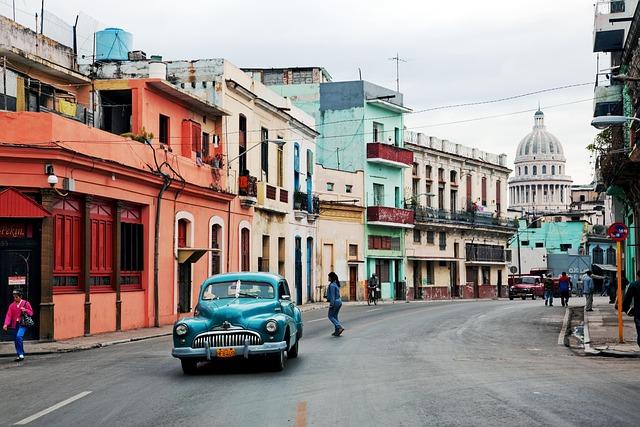
In a landmark decision that could reshape the economic landscape of Cuba, the Cuban government has announced that Cuban Americans will soon be permitted to own and operate businesses on the island. This policy shift, hailed by some as a potential catalyst for economic revival, raises critical questions about the future of Cuba’s struggling economy. While supporters argue that increased foreign investment and entrepreneurial spirit could breathe new life into the nation, skeptics caution that this measure may not be sufficient to address the deep-rooted challenges facing the Cuban economy. As the island grapples with ongoing issues of inflation, shortages, and the lingering effects of decades of isolation, this development invites a closer examination of whether allowing Cuban Americans to participate in the domestic market can indeed foster meaningful change or merely serve as a temporary fix.
Cuban American Entrepreneurs: A New Opportunity for Economic Revival
The recent policy shift allowing Cuban Americans to own businesses in Cuba signifies a potential shift towards economic revitalization. This initiative could harness the entrepreneurial spirit of the diaspora, who bring diverse skills, capital, and experiences that can invigorate the local economy. Key advantages of this development include:
- Access to Capital: Cuban Americans often have the resources to invest, which could lead to job creation.
- Diverse Expertise: Many entrepreneurs come from various sectors and can introduce modern business practices.
- Innovation and Technology Transfer: New business models and technologies can improve productivity.
However, challenges remain that must be addressed to fully leverage these opportunities. Existing barriers such as bureaucratic hurdles, regulatory constraints, and the overall economic environment could hinder the growth of these enterprises. A recent analysis reveals:
| Challenge | Implication |
|---|---|
| High Taxes | Limits profit margins |
| Bureaucratic Delays | Inhibits rapid business operations |
| Infrastructure Issues | Affects supply chain efficiency |
Challenges Ahead: Assessing the Impact of Business Ownership on Cuba’s Economy
The recent reforms permitting Cuban Americans to establish businesses in Cuba signal a potential paradigm shift for the island’s economy. However, the road ahead is fraught with complexities that could hinder the anticipated economic revival. Among the challenges are regulatory hurdles, limited infrastructure, and the persistence of state control, which may dampen entrepreneurial spirits. While foreign investment and local entrepreneurship could stimulate growth, the overarching influence of the government often stifles innovation and operational freedom. Many potential business owners may find themselves caught between a desire to contribute positively to their homeland and the realities of a system that favors state-run enterprises over private initiatives.
Moreover, the impact of these changes must be evaluated within the context of socio-economic disparities and resource distribution on the island. Cuban Americans entering the market might bring much-needed capital and expertise; however, the benefits might not universally trickle down to the average citizen. In fact, the likelihood of creating a two-tiered economy could emerge, with Cuban Americans flourishing while local entrepreneurs face obstacles. Key factors contributing to this potential divide include:
- Access to capital and financing options
- Differences in regulatory treatment and bureaucratic processes
- The ongoing challenge of navigating supply chains
To illustrate this further, consider the following table summarizing various factors influencing business ownership in Cuba:
| Factor | Impact |
|---|---|
| Regulatory Environment | High complexity could deter investment |
| Infrastructure Quality | Limits efficient operations and growth |
| Government Support | Potential favoritism towards state businesses |
| Access to Resources | Strains on supply chains can restrict growth |
Policy Recommendations: Fostering Sustainable Growth Through Investment and Innovation
Allowing Cuban Americans to own businesses in Cuba is a significant step towards revitalizing the island’s stagnant economy; however, it is essential to complement this policy with an array of strategic investments and innovative initiatives. Encouraging foreign direct investment (FDI) is crucial, as it can bring in not only capital but also the expertise necessary for modernizing industries. Policymakers should consider offering incentives such as tax breaks, streamlined regulations, and protection for new enterprises to stimulate the influx of FDI. Additionally, fostering innovation through technology transfer programs can play a pivotal role in enhancing productivity and growth in various sectors, including agriculture, tourism, and services.
Building a sustainable economic model requires a holistic approach that prioritizes education and workforce development to equip the local population with the necessary skills to thrive in a competitive market. This can be achieved through partnerships between private businesses and educational institutions, fostering a climate of continuous learning and adaptability. Furthermore, the government should establish a framework that promotes entrepreneurship through access to credit and support networks for startups, enabling them to flourish. By creating an ecosystem that encourages self-sufficiency and creativity, Cuba could transform into a hub of innovation, not just for its citizens but as a beacon of hope for the broader Caribbean region.
Key Takeaways
As Cuban Americans prepare for the opportunity to own and operate businesses in their homeland, the potential for economic revival is met with both hope and skepticism. While this landmark policy shift could empower expatriates to contribute to local economies and stimulate job creation, the broader questions surrounding structural reform and political freedom remain unanswered. With a history of challenges deeply embedded in Cuba’s economic fabric, the efficacy of this change will depend on more than just investment capital. As the nation stands at a precipice of transformation, stakeholders both at home and abroad will be watching closely to see if this move marks a new era of prosperity or merely tempers the existing frustrations of a long-struggling economy. The road ahead is fraught with complexities, and only time will tell if this initiative will be enough to chart a sustainable course for Cuba’s future.