

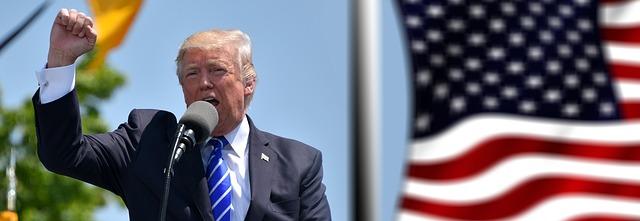
In a provocative statement that has reignited discussions about U.S.-Venezuela relations, former President Donald Trump has once again suggested the possibility of Venezuela becoming the 51st state of the United States. This offhand remark, made during a recent appearance, not only raises eyebrows but also prompts a deeper examination of the political, social, and economic implications of such an unprecedented move. Amid ongoing turmoil in Venezuela and escalating tensions in international politics, Trump’s comment has reignited a debate about American expansionism, sovereignty, and the future of relations with Latin America. As both supporters and critics weigh in, this proposal serves as a stark reminder of the complexities surrounding U.S. foreign policy in the region. In this article, we delve into the historical context, the reaction from key figures, and what this means for the future of U.S.-Venezuela relations.
Trump’s Vision: Evaluating the Implications of Adding Venezuela as a U.S. State
In recent remarks, former President Donald Trump reignited discussions around the possibility of Venezuela becoming the 51st state of the United States. This notion, while seemingly far-fetched to some, raises critical questions about the geopolitical and economic ramifications of such an integration. Advocates argue that merging with Venezuela could offer several benefits, including:
- Economic Opportunity: With vast oil reserves, Venezuela’s integration could significantly boost U.S. energy resources.
- Political Stability: The move might provide a pathway to stabilize a nation beset by political turmoil.
- Humanitarian Aid: Statehood could facilitate increased support and resources for Venezuelans struggling under a collapsing economy.
However, this proposition also demands careful scrutiny regarding its implications for both Venezuela and the U.S. The complexities of integrating a country with such stark differences in governance and societal structure pose risks, including:
- Sovereignty Issues: Navigating the transition from a sovereign nation to a state could lead to significant resistance from Venezuelans.
- Cultural Integration: Addressing the deep-rooted cultural disparities between Venezuelans and Americans can present challenges.
- Federal Resource Allocation: The economic burden and investment required to elevate infrastructure could strain U.S. federal budgets.
| Pros | Cons |
|---|---|
| Potential for vast energy resources | Complex governance transition |
| Pathway to political and social stability | Risk of civil unrest |
| Access to a new market for U.S. goods | Immense financial investment needed |
Political Repercussions: How Statehood for Venezuela Could Reshape American Foreign Policy
The prospect of Venezuela achieving statehood within the United States introduces a myriad of potential shifts in American foreign policy. If this idea were to gain serious traction, it could redefine America’s approach to regional dynamics in Latin America, emphasizing a direct stake in the governance and stability of a nation long plagued by political turmoil and economic hardship. By integrating Venezuela as the 51st state, the U.S. government might prioritize restoration efforts, leading to increased investment in infrastructure, healthcare, and education, not only as a means of uplifting Venezuelans but also to strengthen its geopolitical footprint in the region.
Moreover, the implications for U.S.-Latin American relations could be profound, challenging existing alliances and redefining diplomatic engagements. Key factors that might shape this new foreign policy stance include:
- Addressing humanitarian crises and political repression
- Revising trade agreements and economic partnerships
- Enhancing security cooperation to combat drug trafficking and organized crime
- Influencing political reforms to align Venezuela more closely with U.S. democratic values
To better visualize these potential shifts, the following table outlines some notable foreign policy considerations if Venezuela were to become a state:
| Consideration | Current Stance | Potential Shift |
|---|---|---|
| Humanitarian Aid | Limited support | Increased federal funding and resources |
| Trade Relations | Sanctions-based | Trade cooperation with favorable terms |
| Security Policies | Reactive measures | Proactive partnerships and regional stability initiatives |
| Political Reform | Support for opposition | Collaboration on governance and democratic structures |
Public Sentiment: The Pros and Cons of Embracing Venezuela as the 51st State
As discussions about the possibility of Venezuela becoming the 51st state gain traction, public sentiment is divided, with strong opinions emerging on both sides. Proponents tend to highlight several potential advantages:
- Economic Recovery: Some see statehood as a pathway to economic revitalization, potentially attracting investment and support from the U.S.
- Political Stability: Integration could lead to enhanced governance and democratic processes, of benefit to Venezuelan citizens.
- Resource Riches: Venezuela’s vast natural resources could bolster the U.S. economy, providing additional energy supplies.
Conversely, critics voice substantial concerns regarding the implications of such a move. Key arguments against it include:
- Identity and Culture: The unique cultural heritage of Venezuela might be undermined, leading to a loss of national identity.
- Fiscal Burden: Integrating a financially struggling nation could impose significant economic costs on the U.S. taxpayer.
- Geopolitical Tensions: Statehood for Venezuela could escalate tensions with neighboring countries in Latin America, resulting in diplomatic fallout.
Insights and Conclusions
In conclusion, the prospect of Venezuela becoming the 51st state of the United States, as recently posited by former President Donald Trump, highlights a continued intersection of U.S. politics and foreign affairs. While the notion may resonate with some as an innovative solution to the ongoing humanitarian crisis in Venezuela, it raises significant questions about the feasibility and implications of such a bold proposal. As discussions unfold, stakeholders will be tasked with addressing both the political nuances and the humanitarian needs that define this complex situation. As Trump remains a polarizing figure on the national stage, his comments will undoubtedly stimulate debate on the future of U.S.-Venezuela relations and the broader implications for American foreign policy. Time will tell whether this idea gains traction or becomes yet another chapter in the evolving narrative of U.S. engagement in Latin America.

