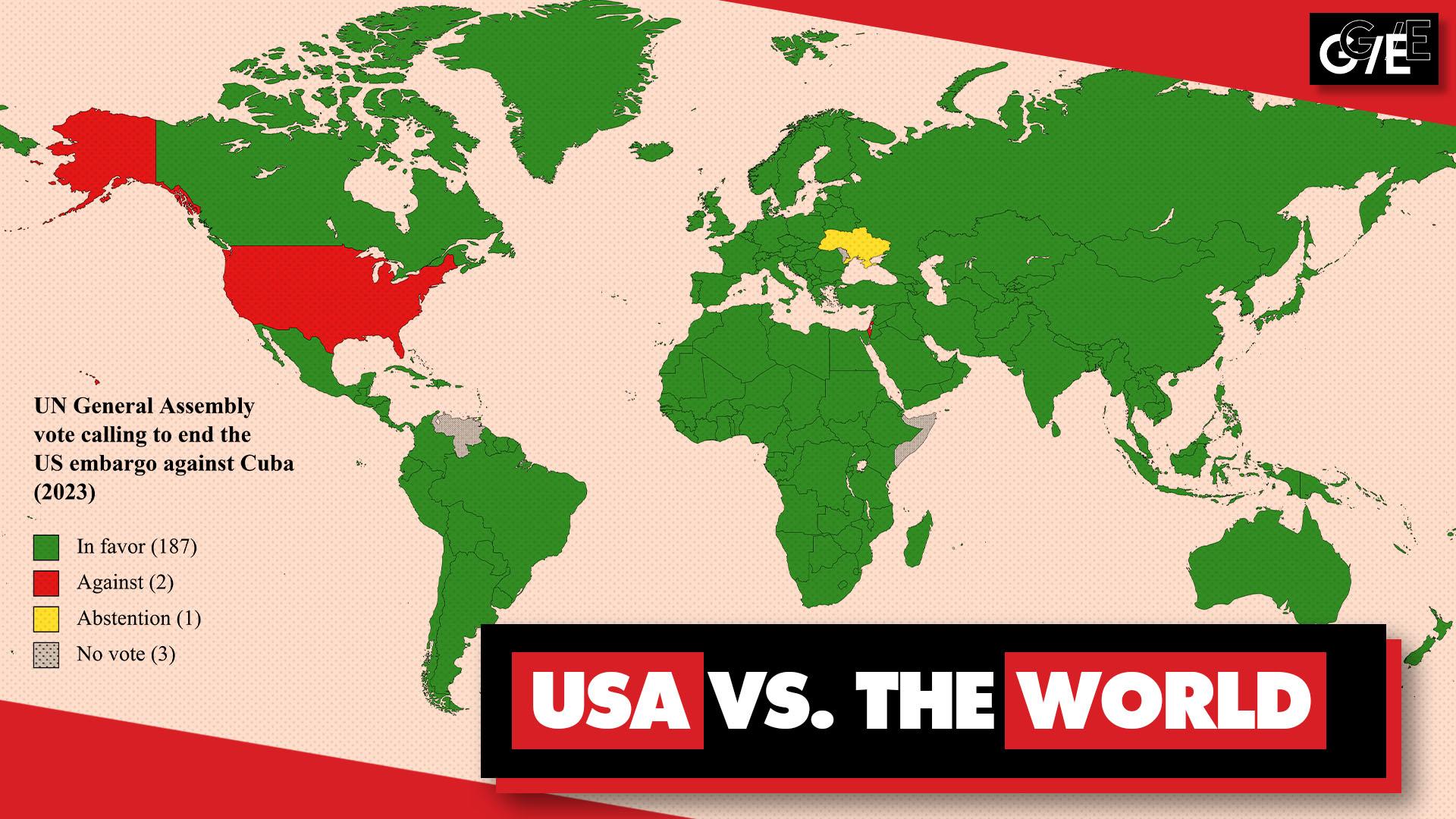
Understanding the Failure of the U.S. Embargo on Cuba: Insights from WOLA
In the ongoing discourse surrounding U.S.-Cuba relations, the embargo imposed by the United States has remained a poignant centerpiece, eliciting both fervent support and vehement opposition. For over six decades, this policy has sought to isolate the island nation economically and politically, ostensibly to foster democratic reforms. Yet, as the Washington Office on Latin America (WOLA) highlights, the reality is far more complex. Rather than achieving its intended goals, the embargo has often succeeded only in entrenching the island’s leadership and exacerbating the hardships faced by ordinary Cubans. This article delves into the intricate layers of the embargo’s impact, examining the historical context, key failures, and the implications for future U.S.-Cuba relations, as illuminated by WOLA’s extensive research and advocacy work. Understanding these dynamics is crucial for policymakers and analysts alike, as Cuba stands at a crossroads in its socio-economic landscape.
Assessing the Economic Impact: Why the U.S. Embargo Failed to Achieve Its Goals
Over the course of several decades, the economic ramifications of the U.S. embargo on Cuba have prompted extensive debate among policymakers and scholars alike. Initially intended to weaken the Cuban government by targeting its economy, the embargo has inadvertently reinforced nationalistic sentiment among the Cuban populace. Despite the restrictions, Cuba has managed to develop a certain level of resilience, adapting to the challenges posed by external sanctions. Notably, some critical aspects include:
- Resourcefulness: Cuba has diversified its economy, particularly through sectors like tourism and biotechnology, allowing it to generate foreign currency despite ongoing restrictions.
- International Support: The island nation has garnered support from various allies amidst U.S. sanctions, facilitating trade relationships that mitigate the effects of the embargo.
The inefficacy of the embargo is further demonstrated through its limited impact on key economic indicators. Despite initial expectations, the embargo has not generated the desired changes in Cuban governance, nor has it significantly diminished public support for the regime. In fact, the following statistics underscore the embargos’ paradoxical outcomes:
| Year | Cuban GDP Growth (%) | Tourism Revenue (in billion USD) |
|---|---|---|
| 2010 | 1.4 | 2.2 |
| 2015 | 4.0 | 2.7 |
| 2020 | -11.0 | 0.4 |
As this table illustrates, while there were fluctuations in GDP growth and tourism revenue, Cuba’s economy has evolved in a manner that complicates the narrative of an embargo-induced collapse. Instead of compelling political change, the embargo has ended up becoming a tool of resilience for the Cuban state, and a point of contention in U.S.-Cuba relations.
Political Ramifications: The Role of U.S.-Cuban Relations in Regional Stability
The complex relationship between the United States and Cuba has far-reaching implications not only for bilateral ties but also for the broader stability of the Latin American region. Historically, U.S. policies towards Cuba have shaped the political landscape in neighboring countries, with the embargo serving as a focal point for anti-American sentiment and a rallying cry for leftist movements. As political tensions rise, nations such as Venezuela and Nicaragua capitalize on perceived U.S. imperialism to bolster their own regimes, further entrenching authoritarianism and undermining democratic initiatives. In contrast, a more open relationship with Cuba could potentially ease regional hostilities and pave the way for more constructive dialogues across the hemisphere.
Moreover, fostering diplomatic relations with Cuba can facilitate functional collaboration on pressing regional issues, particularly in areas like immigration, drug trafficking, and environmental sustainability. Increased cooperation would allow for the sharing of best practices and resources, which could prove beneficial for both nations and their neighbors. As the U.S. considers adjustments to its policy, it is essential to recognize that improved relations might not only stabilize Cuba’s internal situation but also contribute to a more coherent, united approach to common challenges in Latin America. The potential benefits of rapprochement underscore the urgency for a reevaluation of longstanding strategies towards the island.
Paths Forward: Strategic Recommendations for a New Approach to Cuba Engagement
To effectively pivot U.S. policy towards Cuba, a multifaceted strategy is essential. Emphasizing engagement over isolation can cultivate a more stable and constructive relationship. Key recommendations include:
- Prioritize Diplomatic Relations: Re-establishing formal diplomatic channels will facilitate dialogue on human rights and economic cooperation.
- Support Civil Society Initiatives: Investing in grassroots movements and NGOs can empower the Cuban populace and promote democratic values from within.
- Encourage Economic Collaboration: Removing barriers for American businesses and fostering joint ventures can stimulate Cuba’s economy while providing opportunities for U.S. companies.
- Focus on Public Health and Education: Programs aimed at health care and educational exchanges can build goodwill and showcase the U.S. commitment to Cuban well-being.
Strategic re-engagement must also involve addressing complex legacy issues, particularly surrounding the embargo’s impact. A balanced approach might include:
| Action Item | Expected Outcome |
|---|---|
| Lift Specific Economic Restrictions | Boost local businesses and Qlants. |
| Facilitate Cultural Exchange Programs | Strengthen mutual understanding and appreciation. |
| Engage in Joint Environmental Initiatives | Promote sustainable practices and shared responsibility. |
By combining diplomatic efforts with tangible support initiatives, the U.S. can lead to a more nuanced and effective engagement strategy, paving the way for long-term collaboration while respecting Cuba’s sovereignty and addressing its internal challenges.
The Way Forward
In conclusion, the U.S. embargo on Cuba, initially designed as a tool for promoting democratic reforms and weakening the Castro regime, has largely been deemed counterproductive in achieving its stated goals. As detailed in the findings presented by the Washington Office on Latin America, the embargo has not only failed to instigate significant political change but has also contributed to the suffering of the Cuban people, exacerbating economic hardships and limiting access to necessary resources. As discussions about U.S.-Cuba relations evolve, it is essential for policymakers to reassess the strategies employed over the past six decades and consider more effective means of engagement that prioritize humanitarian concerns and support for the Cuban populace. The path forward requires a nuanced understanding of the complex realities on the ground, underscoring the urgent need for a fundamental shift in approach that moves beyond isolation and towards constructive dialogue. As historical lessons demonstrate, lasting change often arises not from punitive measures, but through cooperation and mutual respect.