

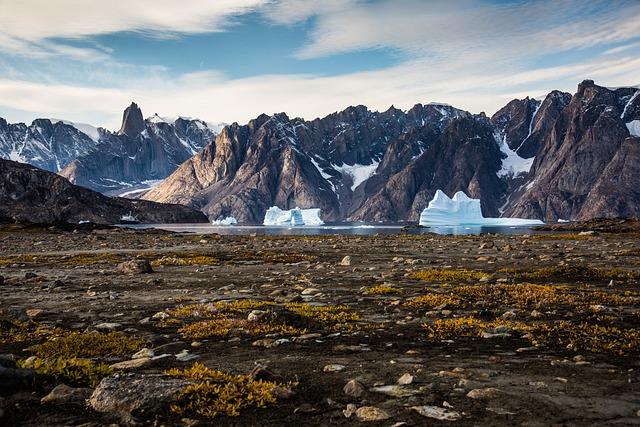
In a striking assertion that highlights the evolving dynamics of international relations and territorial interest, U.S. envoy to Denmark, Carla Sands, recently remarked that Greenland “was not on a map” until former President Donald Trump brought it into the spotlight during his administration. This statement, which drew attention to Trump’s controversial proposal to buy the autonomous territory from Denmark, underscores the shifting geopolitical narrative surrounding Greenland and its strategic significance in the Arctic region. As the global powers increasingly vie for influence over this resource-rich landscape, Sands’ comments encapsulate a broader conversation about the role of geopolitics in shaping our perceptions of territory and sovereignty. This article explores the implications of such declarations and the renewed focus on Greenland in the context of U.S. foreign policy and Arctic affairs.
US Envoy’s Remark on Greenland Highlights America’s Evolving Geopolitical Interests
The recent remarks by the US envoy draw attention to a significant shift in America’s focus toward Greenland, a territory that many may have previously overlooked in the context of geopolitical strategy. Once merely an expansive Arctic territory, Greenland has emerged as a focal point for US interests, particularly in light of its vast natural resources and strategic location. The envoy’s statement underscores a growing recognition that international dynamics are evolving, with nations keenly interested in securing footholds in the Arctic region as climate change opens new shipping routes and access to untapped resources.
As global powers recalibrate their strategies, the importance of Greenland becomes even more pronounced. The increased interest can be attributed to various factors, including:
- Natural Resources: Greenland is rich in minerals and rare earth elements essential for technology and renewable energy.
- Strategic Location: Its position is vital for military and shipping routes across the Arctic, particularly for NATO interests.
- Climate Change: Melting ice caps are making the region more navigable, prompting greater competition for influence.
As the geopolitical landscape shifts, the characterization of Greenland as a territory now “on the map” reflects a broader strategy where the US is positioning itself to play a more proactive role in Arctic affairs. The increasing momentum surrounding this topic suggests that stakeholders from various corners-including the US, China, and Russia-will engage in substantial dialogue and potential power plays concerning the future of this critical region.
Assessing the Impact of Trump’s Greenland Controversy on US-Danish Relations and Arctic Strategy
The controversy surrounding Donald Trump’s interest in purchasing Greenland has undeniably reshaped the dynamics of US-Danish relations. Prior to this incident, Greenland was often viewed merely as a remote territory, largely overlooked in strategic discussions by both previous administrations and NATO allies. However, Trump’s audacious proposition did the unexpected: it thrust the island into the international spotlight. As a result, Danish officials found themselves navigating a convoluted diplomatic landscape that included not only defending the status of their territory but also reassessing their bilateral ties with the United States. This shift has compelled both nations to engage in a dialogue that prioritizes Arctic strategies, leading to a renewed focus on mutual interests in areas such as resources, security, and climate resilience in the rapidly changing Arctic environment.
Moreover, the implications of this diplomatic kerfuffle extend beyond bilateral relations and underscore the escalating competition between global powers in the Arctic. Amid growing concerns regarding Chinese investments and ambitions in the region, the United States has started to recalibrate its approach to Arctic strategy. Key factors influencing this shift include:
- Increased military presence in the Arctic
- Strategic partnerships with Nordic countries
- Emphasis on climate change and environmental stewardship
As the US seeks to fortify its influence in the Arctic while reassuring its allies, the legacy of Trump’s Greenland deliberations will likely resonate for years to come, shaping future policies and international collaboration in this geopolitically vital region.
In Conclusion
In conclusion, the remarks made by the U.S. envoy highlight the evolving geopolitical significance of Greenland and its place in international discussions. Once a geographic afterthought, the territory has gained newfound attention, particularly following former President Trump’s controversial interest in its potential for acquisition. As global dynamics shift and Arctic regions become arenas for strategic competition, Greenland’s role on the map-literal and figurative-has been irrevocably altered. The ongoing dialogue surrounding the island underscores the need for a nuanced understanding of global relationships and territorial interests. As the U.S. continues to navigate its diplomatic efforts in the Arctic, Greenland will undoubtedly remain a focal point in conversations regarding resource access, climate change, and international cooperation.

