

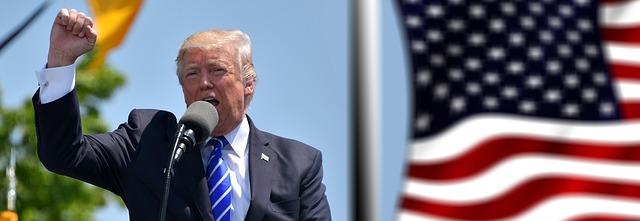
As the political landscape in the Americas continues to shift, the prospects of a second Trump administration loom large on the horizon, raising questions about U.S. foreign policy towards Central America. One of the most pressing concerns is the fate of Nicaragua, where President Daniel Ortega’s regime has drawn international condemnation for its repressive tactics against dissent and human rights abuses. With Donald Trump rumored to be considering a return to the Oval Office, analysts are keenly debating whether “Trump 2.0” would adopt a tougher stance on Nicaragua’s dictatorship than his previous tenure. This article explores the potential implications of a re-elected Trump administration for Nicaragua, examining the intersection of domestic politics and foreign policy, as well as how it may influence the ongoing struggle for democracy in the region.
Trump’s Strategic Shift: Analyzing Potential Policies on Nicaragua’s Regime
In a significant policy shift, former President Donald Trump is hinting at a more aggressive stance towards the Nicaraguan regime led by Daniel Ortega. Following a period of relative disengagement from Central America during his previous term, analysts are questioning whether Trump 2.0 will embrace a tougher diplomatic and economic strategy aimed at undermining Ortega’s authority. This potential pivot arises amidst heightened concerns about human rights abuses and political repression in Nicaragua, which have drawn widespread international condemnation. Key components of Trump’s possible approach could include:
- Increased Sanctions: Expanding economic sanctions targeting Ortega’s closest allies and state enterprises.
- Diplomatic Pressure: Rallying international support to isolate Nicaragua in forums like the Organization of American States (OAS).
- Support for Opposition: Providing aid and resources to Nicaraguan opposition groups to strengthen their capacity against the regime.
To effectively implement these strategies, the Trump administration would likely rely on a targeted approach that balances pressure with diplomatic engagement. This could involve leveraging U.S. influence through regional partnerships to create a unified front against Ortega, with a focus on democratic restoration and civil liberties in Nicaragua. A potential framework for this diplomatic engagement could look like the following:
| Action Item | Description |
|---|---|
| Strengthening Alliances | Forming coalitions with regional and international players to combat authoritarianism. |
| Human Rights Advocacy | Promoting initiatives that highlight abuses and empower local activists. |
| Economic Aid Reallocation | Redirecting aid towards education and health programs as a means to undermine regime support. |
Assessing the Human Rights Impact: How Tougher Stance Could Affect Nicaragua’s Citizens
The prospect of a more aggressive U.S. policy toward Nicaragua under a hypothetical second Trump administration raises significant questions about its implications for human rights. A tougher stance could catalyze a series of consequences for Nicaraguan citizens already grappling with economic turmoil and state repression. Increased sanctions aimed at the Ortega regime may pressure the government, but they could also inadvertently harm vulnerable populations, leading to exacerbated poverty and restricted access to essential goods and services. While regime leaders might face consequences, ordinary citizens could bear the brunt of these punitive measures, prompting grave concerns over the potential for a humanitarian crisis.
Moreover, augmented diplomatic and military support for opposition groups could deepen societal divisions and escalate violence within Nicaragua. The potential for a new cycle of repression against dissenters and activists might increase as the government defends itself from perceived threats posed by both internal and external actors. To gauge this evolution, it’s essential to monitor key indicators, such as:
- Changes in political freedoms and civil liberties
- Reports of human rights violations by state actors
- Access to humanitarian aid for those impacted by sanctions
The following table summarizes recent reports on the human rights situation in Nicaragua:
| Indicator | Current Status | Trend |
|---|---|---|
| Political Prisoners | Over 200 | Increasing |
| Press Freedom Ranking | 163rd globally | Declining |
| Access to Basic Needs | Crisis levels | Worsening |
Recommendations for a Coherent Approach: Balancing Diplomatic Pressure and Support for Democracy
In navigating the complex political landscape of Nicaragua, a coherent strategy that simultaneously applies diplomatic pressure while fostering democratic ideals is essential. The U.S. must engage with regional partners to present a united front against the Ortega regime, emphasizing the importance of human rights and the rule of law. Key measures to consider include:
- Targeted sanctions: Implement precise economic sanctions aimed at Nicaraguan officials and entities implicated in human rights violations.
- Support for civil society: Increase funding and resources for NGOs and independent media that champion democracy and human rights.
- Dialogue facilitation: Promote channels for dialogue between the regime and opposition groups to encourage political reconciliation.
- Regional cooperation: Strengthen alliances with Latin American nations to ensure a collective stance against authoritarianism in Nicaragua.
A careful balance is critical; overt aggression can alienate potential allies, while passivity may embolden the regime. The historical context is telling, as previous administrations have seen both diplomatic overtures and severe sanctions yield mixed results. A possible framework to evaluate the effectiveness of these measures could be outlined in the following table:
| Strategy | Potential Impact | Risks |
|---|---|---|
| Targeted sanctions | Weaken regime’s financial power | May hurt ordinary citizens |
| Support for civil society | Empower democratic movements | Repression from the state |
| Facilitating dialogue | Encourage political compromise | Risk of co-opting opposition |
| Regional cooperation | Increase diplomatic influence | Fragmentation of regional alliances |
Wrapping Up
In conclusion, the prospects of a tougher U.S. stance on Nicaragua under a potential Trump 2.0 administration remain clouded in uncertainty. While a return to power could herald a shift toward more assertive measures against President Daniel Ortega’s regime, the complexities of international diplomacy, domestic political pressures, and evolving geopolitical landscapes will undoubtedly shape the approach. As the situation in Nicaragua continues to deteriorate, with increasing repression and human rights violations, the question remains: will the former president prioritize a firm response against authoritarianism in the Americas, or will he revert to the more transactional relationships that characterized his previous term? As policymakers and analysts keep a close eye on developments, one thing is clear: the future of U.S.-Nicaragua relations may hinge on the interplay of ambition, ideology, and the call for democratic values in the region.

